
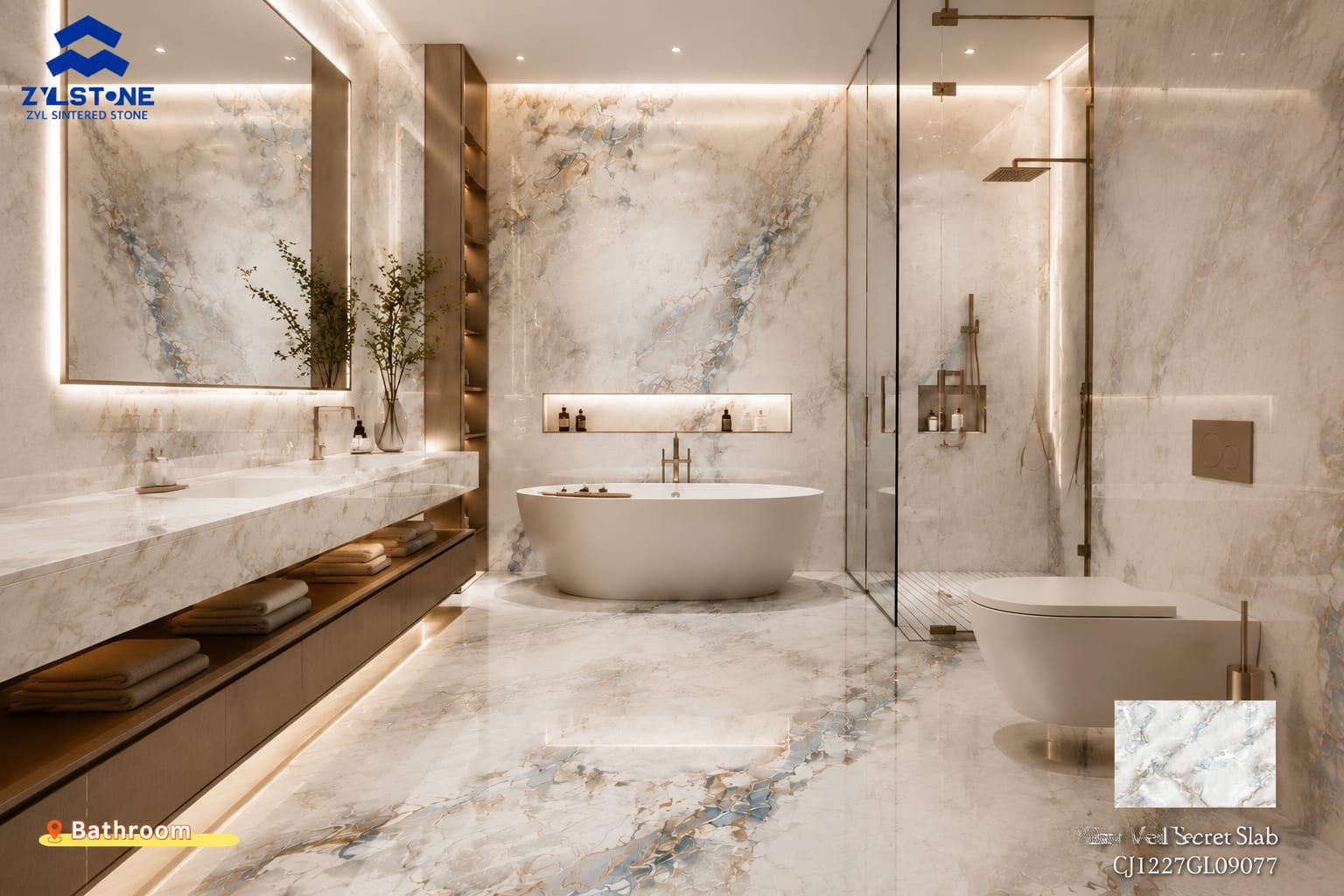
When selecting sintered stone overseas, look beyond pattern: lead time and supply stability also matter
Overseas material selection cannot stop at pattern and color. Lead time, inventory, container-loading efficiency, and replenishment capability also determine whether a project can land on schedule. An attractive sintered stone is only the start; stable supply decides whether it can be delivered.
When selecting sintered stone, pattern, texture, and surface effect are usually the first things people look at. For overseas engineering projects, however, whether a sintered stone is suitable cannot be judged from the finished look alone. However attractive the sample, if the bulk product cannot be supplied to the project schedule, or if specifications, inventory, and the container-loading plan are not confirmed in advance, later construction arrangements can still be disrupted. For importers, distributors, and project procurement teams, material selection should go beyond design effect: it also needs an early check that the product can move steadily into the later purchasing and construction workflow.
![[object Object]](https://cdn.zylsinteredstone.com/news-sintered-stone-selection-lead-time-supply-stability-02-400x267.jpg)
1. Is the lead time stable?
Overseas projects usually have clear construction milestones. If the material does not arrive as planned, the impact may go beyond a single trade and can also affect fabrication, installation, and later construction sequencing. When confirming a sintered stone product, therefore, it is worth finding out in advance:
- Whether the stock quantity can cover the current order;
- What the production cycle is for items that are not in stock;
- Whether bulk orders have a clear production schedule;
- Whether later replenishment is convenient;
- Whether the shipment date can align with the project's construction plan.
For projects with tight timelines, the supply rhythm itself is part of what needs to be considered at the selection stage.
2. Container-loading efficiency affects actual logistics cost
Sintered stone is a large-format building material. Transport cost is related not only to ocean freight rates, but also to product specification, packaging method, and container-loading efficiency. If slabs of different sizes are loaded without a plan in advance, container space may not be used well. At the inquiry stage, therefore, besides confirming the unit price, it is also useful to ask about: product specifications, packaging method, load quantity per container, and the actual container-loading plan. A well-planned load reduces wasted space and helps the procurement team estimate the actual logistics cost per square meter more accurately.
![[object Object]](https://cdn.zylsinteredstone.com/news-sintered-stone-selection-lead-time-supply-stability-03-400x267.jpg)
3. Confirm specifications and inventory together
Sintered stone procurement on engineering projects is usually done in bulk. If the only confirmation is "whether this pattern is available," without going on to confirm the exact specification and the quantity that can be supplied, later work may require a last-minute size change, a new production run, or a wait for replenishment. Especially when the same project has several space applications, the following should be clarified before the order is placed:
- Product model;
- Size and thickness;
- Current stock quantity;
- Bulk supply capability;
- Packaging method;
- Later replenishment conditions.
The earlier these details are confirmed, the easier later purchasing and construction arrangements usually are to control.
![[object Object]](https://cdn.zylsinteredstone.com/news-sintered-stone-selection-lead-time-supply-stability-04-400x267.jpg)
4. Do not calculate product unit price alone
What overseas procurement really needs to watch is the entire path from supplier to project site. A slightly lower quote per square meter does not necessarily mean a lower final procurement cost. If a shortage means waiting, a specification mismatch means buying again, or a lead-time change disrupts the construction schedule, those extra costs also have to be counted. When comparing sintered stone suppliers, therefore, put together: product price + inventory + lead time + packaging + container-loading efficiency + replenishment capability. A comparison made this way is usually closer to the project's actual cost than simply comparing price per square meter.
For overseas sintered stone procurement, selection can follow this order
Design effect certainly matters. After the product is chosen, however, it still needs to be confirmed that it can meet the actual project requirements. A practical purchasing sequence is: confirm the spatial effect first → then confirm specifications and inventory → then confirm lead time → and finally confirm the packaging and shipping plan. The aim is not to give up on pattern and design, but to avoid discovering only after the product is locked that supply and delivery cannot keep up with the project schedule.
ZYL Sintered Stone currently holds about 2,000,000 m² of sintered stone stock, and continues to supply large-format sintered stone to overseas importers, distributors, and engineering projects.
![[object Object]](https://cdn.zylsinteredstone.com/news-sintered-stone-selection-lead-time-supply-stability-05-400x267.jpg)
For bulk export and engineering projects, the value of stock is not only that "there is product available." More important is that it gives the procurement team more options on supply and scheduling.
An attractive sintered stone is only the start; stable supply decides whether it can land
Pattern decides the design effect, specification decides how it can be applied, and stable supply and delivery decide whether the later project can move forward. Overseas sintered stone procurement can therefore look one step beyond "who quotes the lowest": Does this product have enough stock? Do the specifications match? When can it ship? How will one container be loaded? Is later replenishment convenient? Confirming these questions early is often more useful in practice than simply pushing down the unit purchase price.