
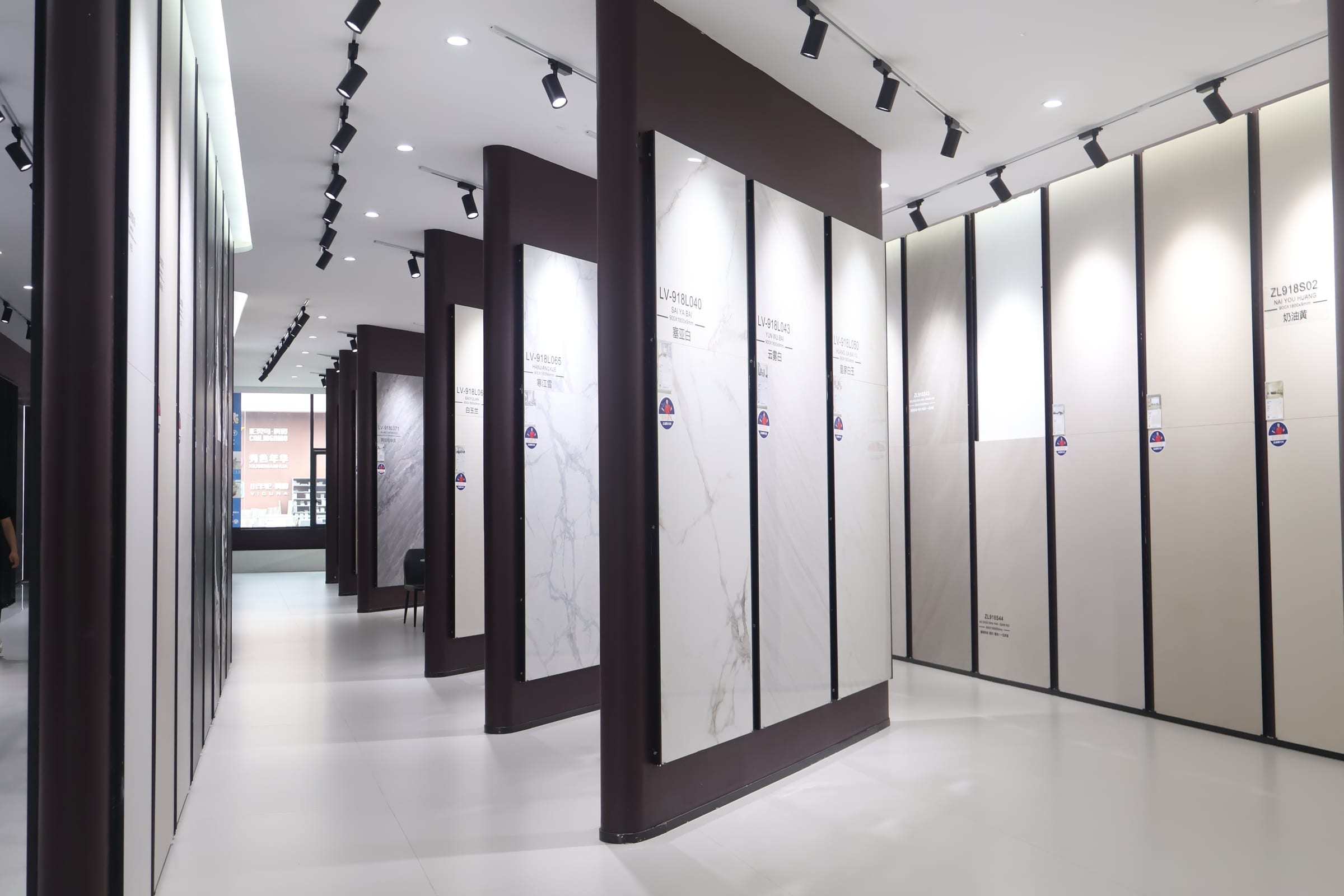
Sintered Stone Inspection: Surface Details Matter More Than Pattern
Sintered stone inspection is more than whether a pattern looks good. Small air bubbles, black spots, and surface flatness are easier to notice after large-area installation. For bulk projects, sample standards and batch consistency should be confirmed from the production stage.
When choosing sintered stone, pattern, texture, and gloss are usually the first things people notice. For construction projects and bulk purchasing, however, the final result is often decided by surface details that are easy to miss at the sample stage. A small sample that looks fine does not mean a full shipment will keep the same visual effect. On large-format sintered stone used across continuous walls, floors, or countertops, minor surface defects can become more visible. Inspection should therefore go beyond whether the overall pattern looks good, and include a closer check of the slab surface.
1. Small air bubbles: a problem often seen only up close
Some surface bubbles are not obvious at a normal viewing distance, and on a small sample they are easy to overlook. After the same batch is installed over a large area, if similar issues repeat across different slabs, they can affect the integrity and look of the overall surface. During inspection, it is useful not only to view the full slab, but also to shorten the viewing distance and examine the surface more carefully.
![[object Object]](https://cdn.zylsinteredstone.com/news-sintered-stone-inspection-surface-details-02-400x712.jpg)
2. Small black spots: easy to miss on a sample, easier to notice at scale
Small black spots or local impurities may not stand out on a single sample. On light or solid-color sintered stone, especially on large walls or in commercial spaces, the visual contrast becomes much clearer. For bulk purchases, both sides should agree on an appearance standard when the sample is confirmed, including the acceptable range of minor defects, rather than judging this only after the goods arrive.
![[object Object]](https://cdn.zylsinteredstone.com/news-sintered-stone-inspection-surface-details-03-400x454.jpg)
3. Surface flatness: do not inspect from the front only
Surface flatness cannot always be judged by looking straight at the face. During inspection, view the slab from different angles and use natural light or side lighting. Angled light makes local unevenness, waviness, or other surface variation easier to see. This step matters even more on large-format sintered stone. The larger the slab, the more easily a small local change can become a continuous visual difference after installation.
4. Inspection is best started during production
Quality control for sintered stone should not begin only after the goods reach the project site. A more reliable approach is a continuous check from production, inspection, and packaging through to shipment. Confirming the sample standard before bulk production, sampling during production, checking product condition again before packaging, and making a final confirmation before container loading can catch problems earlier and reduce the chance of rework, replenishment, or rearranged transport after arrival.
![[object Object]](https://cdn.zylsinteredstone.com/news-sintered-stone-inspection-surface-details-04-400x225.jpg)
Practical advice for sintered stone inspection
For imported sintered stone and project purchasing, the inspection checklist can include these steps: First, look at the whole slab, then the details. Confirm that pattern, texture, gloss, and overall effect match the approved sample, then inspect the surface at close range. Second, change the viewing angle. Do not inspect only from the front and under fixed lighting; use different angles and side light to check flatness. Third, agree the inspection standard in advance. Before the order is confirmed, define the sample standard, the acceptable appearance variation, and the inspection requirements, so different interpretations do not appear only after the goods arrive on site.
Fourth, check consistency across the full batch. A construction project should not inspect only one or two slabs. The overall stability of the same batch matters more.
Good sintered stone inspection is more than asking whether it "looks good"
Pattern and texture create the first impression of sintered stone. For construction projects, the final result also depends on whether the product stays consistent after bulk delivery. Small air bubbles, black spots, and surface flatness may not look serious on their own, but they are often magnified in large-area applications. When buying and inspecting sintered stone, rather than only asking whether a pattern looks good, it is more useful to confirm: What is the sample standard? How consistent is the bulk product? How is inspection handled during production? Is there a final check before shipment?
These questions usually help a purchasing team judge whether a batch of sintered stone is fit for a real project application more reliably than comparing pattern and price alone.
![[object Object]](https://cdn.zylsinteredstone.com/news-sintered-stone-inspection-surface-details-05-400x267.jpg)