
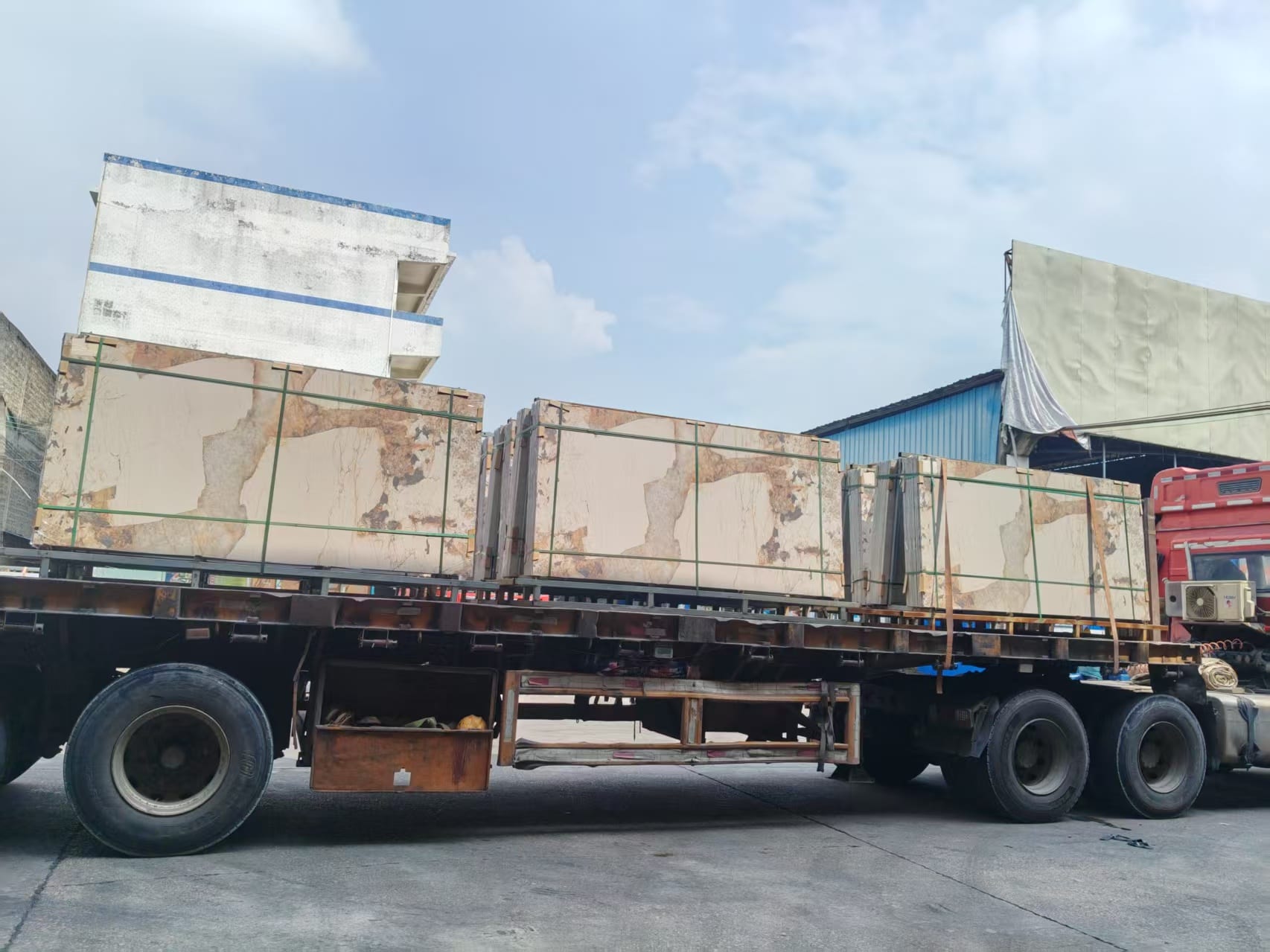
Buying Sintered Stone for Projects: What Should You Verify Beyond the Name?
Project procurement must verify the model, thickness, batch, technical documentation, intended use and fixing system, not just color, size and price.
Start here: color is not the first priority when purchasing sintered stone for a project
In project procurement, many buyers first look at color, size and price. Yet the problems that most often arise at the project stage usually come from failing to confirm the product model, thickness, batch, technical parameters and installation system in advance.
Terms such as “sintered stone,” “large-format slab” and “thick porcelain panel” are sometimes used interchangeably in the market. For a project, it is more important to specify the exact product than to debate what a salesperson calls it: the model, thickness, dimensions, surface finish, applicable test documents and intended location of use.
Which categories of information should project procurement confirm?
Procurement information can be divided into four groups:
1. Material information: product name, model, dimensions, thickness, surface finish, color code or batch.
2. Performance documentation: depending on the application, data such as water absorption, breaking strength, elastic modulus, thermal expansion, freeze-thaw resistance, chemical resistance, stain resistance and slip resistance.
3. System information: whether hardware, adhesives, undercut anchors and other components are compatible with the product and application system.
4. Project documentation: details, slab layout drawings, structural calculations and concealed-work inspection records.
Not every project requires every document. However, for facades, curtain walls, high-rise areas, atriums, large surfaces or structural anchoring, decisions should not rely only on a sample and a salesperson's verbal assurance.
Why are brand, origin or thickness alone not enough?
Brand and origin can help buyers narrow the supplier list, but they cannot replace confirmation of the exact model, batch consistency and system compatibility. Product conditions may differ among series from the same brand, while color variation and actual condition still need attention across batches of the same series.
A more practical approach to project procurement is to approve and retain a reference sample, record batches, conduct incoming spot checks and trial-fit slabs before installation. If a problem occurs, the material can then be traced precisely instead of being identified only by a brand name.
How can you check whether the supplier's material matches project requirements?
Check at three levels:
1. Confirm that the product name, model and dimensions on the contract match the packaging.
2. Confirm that the delivered product matches the approved sample in color, surface, body, thickness and fabricated edges.
3. Confirm that the supplier's test reports and technical documents correspond to the actual product.
For large projects in particular, do not approve full production based on a single sample. A sample is a reference; batch control and project records are the basis for subsequent delivery.
A simple decision framework for project buyers
Project procurement of sintered stone requires more than asking whether the material is truly sintered stone. You need to know:
What exactly is the product?
What thickness and dimensions?
Which batch?
What technical documentation is available?
Where will it be installed?
Which fixing system will be used?
Confirming these points before placing the order is more meaningful than comparing only patterns and price per square meter.